
Built in the open
Much of what we build for customers is on GitHub, so you can read it before you hire us. A few of our tools are free for anyone to use.
Open source
Open source
Kubernetes · Helm
Helm charts
The charts we use to deploy services on Kubernetes: one tested way to run applications, with sensible defaults for scaling, ingress, security and storage.
View on GitHubInfrastructure as code · Terraform
Terraform modules
Modules for AWS, Azure and Huawei Cloud: networks, Kubernetes (EKS, AKS, CCE), databases, caches, queues, keys and more. The modules are small and built the same way.
View on GitHubKubernetes · Go
shepherd
A small cluster janitor. When a node dies hard, pods stay in Terminating and a Recreate rollout waits forever: shepherd force-deletes them, and cleans up evicted pods. Event-driven, with a dry-run mode.
View on GitHubNetworking · Go
epictetus
A poor man’s load balancer: a Kubernetes controller that keeps Cloudflare DNS records for node-backed services, publishing each hostname with only as many nodes as its share of traffic needs.
View on GitHubBare metal · Ansible
k8s-provisioner
Builds Kubernetes clusters on your own servers with kubeadm and Ansible: system setup, storage, security hardening and monitoring, as one repeatable project.
View on GitHubDevOps · Shell
tools
The DevOps toolset our engineers use every day: container images for CI agents, deployments, debugging and builds.
View on GitHubFree tools
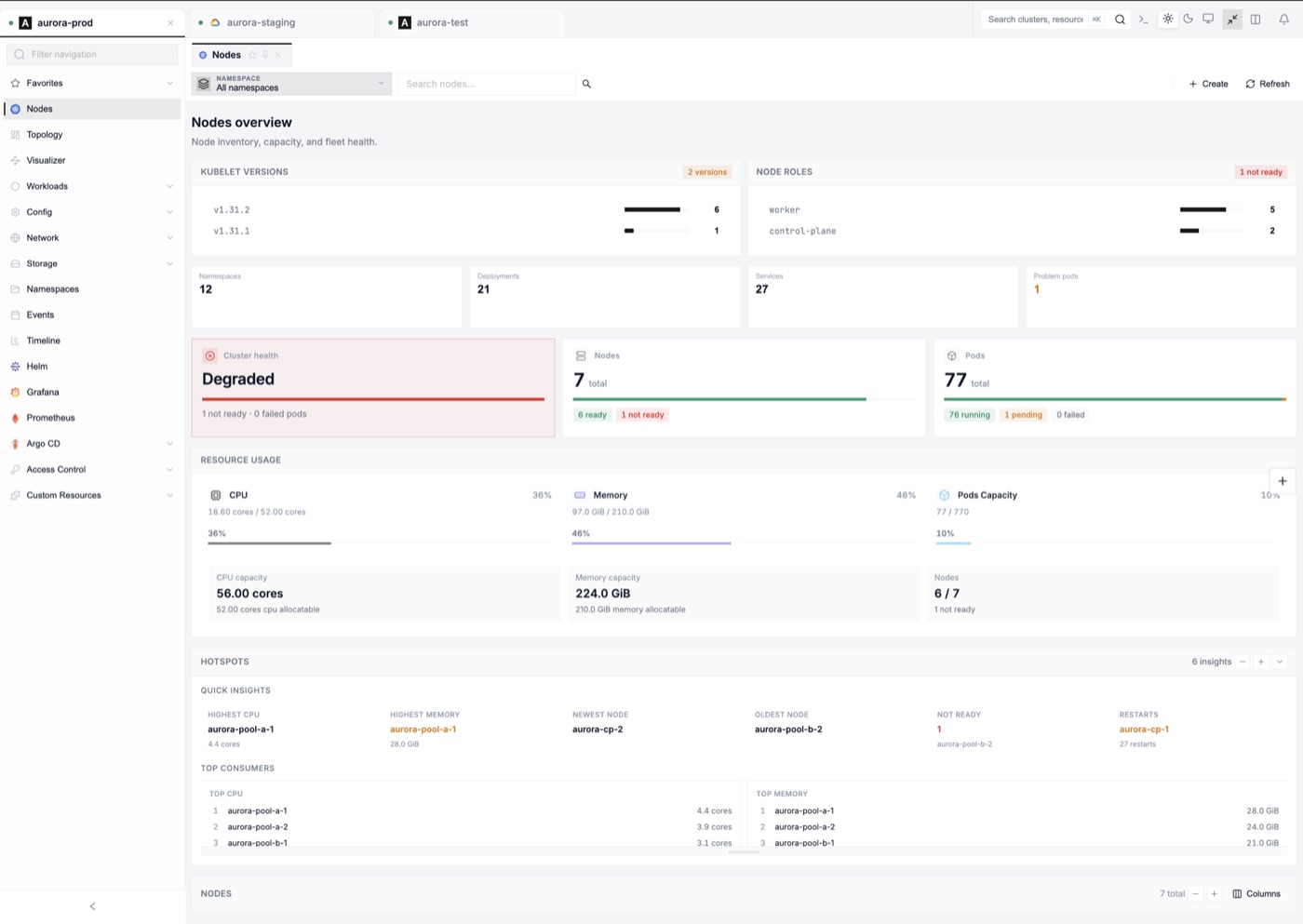
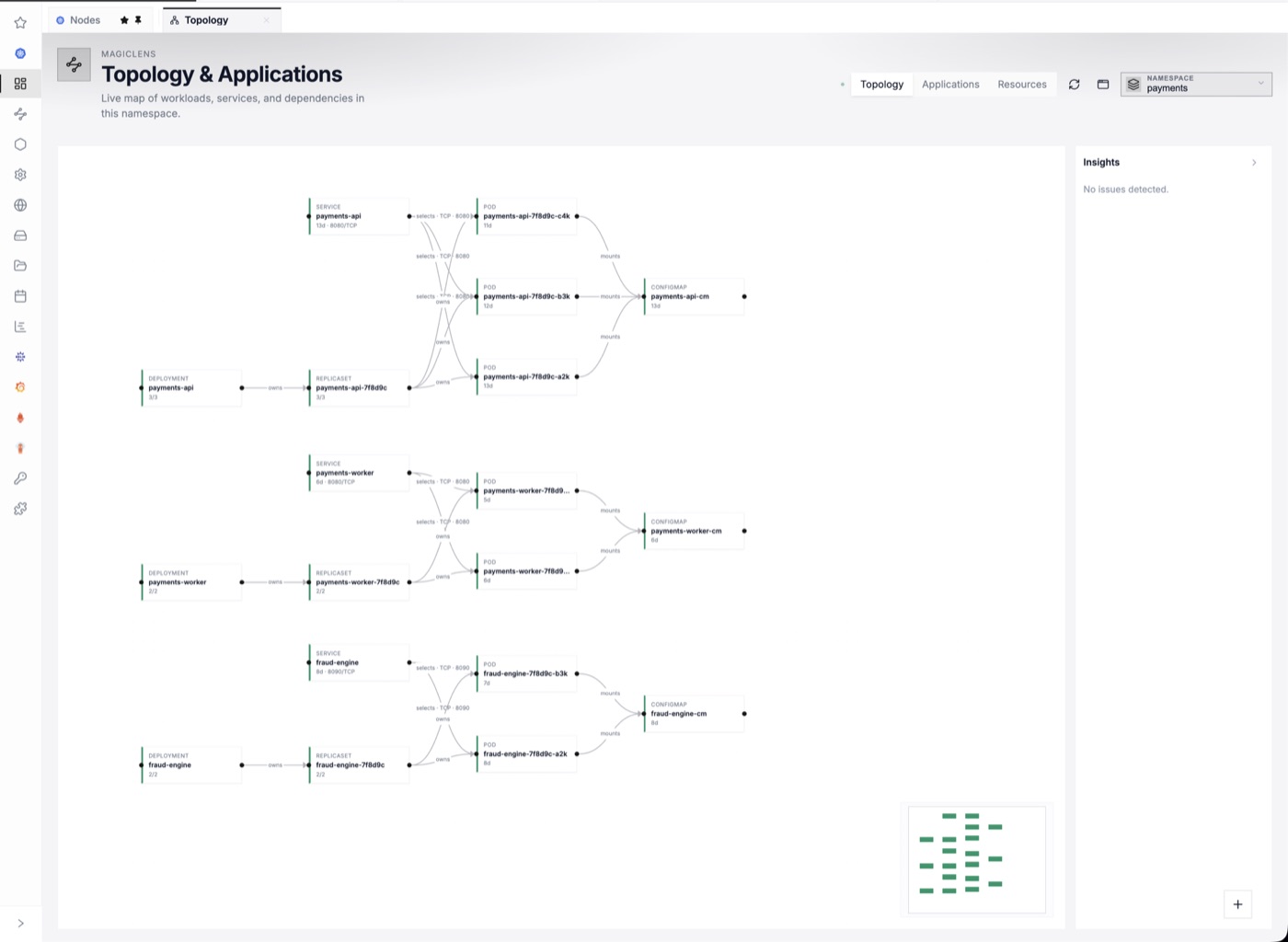
magiclens, a Kubernetes desktop
A native Kubernetes desktop for macOS, Windows and Linux: every cluster in one window, to browse, debug and operate, with Argo CD, Helm and a visual map of your cluster built in.
- It talks to your cluster with your own kubeconfig, and your cluster data stays on your machine.
- Clusters open as tabs, with named workspaces and a split view for staging next to production.
- It also lets you act: scale, restart, roll back, change images, open a shell, tail logs, forward ports, sync Argo CD apps and manage Helm releases.
- A nodes overview, a topology map and an event timeline sit next to the live tables.
Free to use. The source code is not open: the repository holds the signed installers and the documentation.

Why we do it
Why we publish it
Everything we build for a customer is infrastructure as code, and much of it starts from the modules and charts on this page. You can read how we work and compare it with your own setup.
Publishing also means that what we learn on one customer’s platform can improve the next one.
Want it running?
Want help running it?
Tell us what you are building and we will show you how the pieces fit.
Book a 30-minute call